
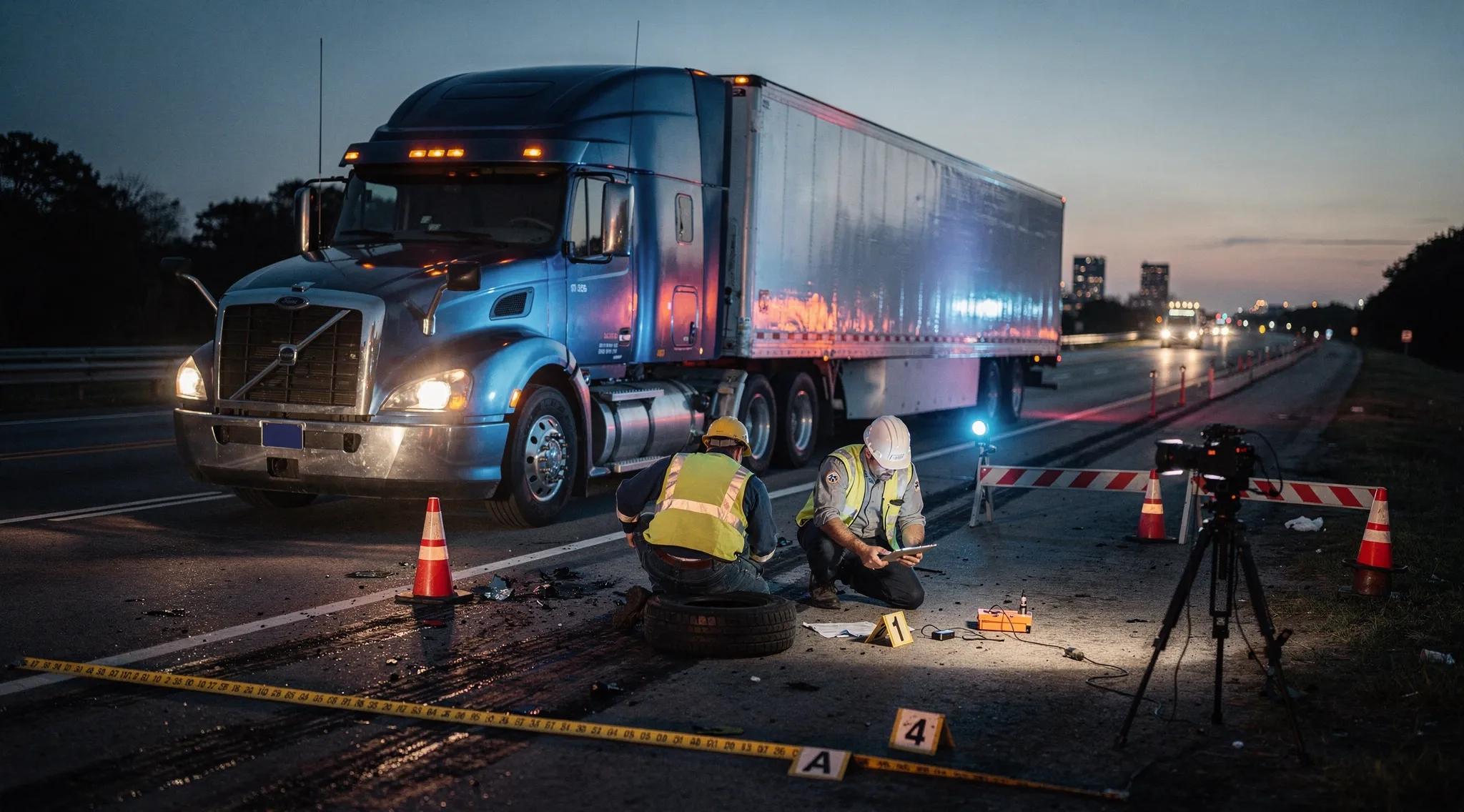
Las investigaciones de accidentes de camiones son procesos complejos que implican múltiples pasos para determinar la causa y las circunstancias del accidente. Estas investigaciones son cruciales para garantizar la rendición de cuentas y mejorar la seguridad vial. En esta guía completa, exploraremos los pasos clave de las investigaciones de accidentes de camiones, incluyendo la recuperación y el análisis de los datos de la caja negra, el cumplimiento del registro de conducción, los procedimientos de inspección posteriores al accidente y las implicaciones legales de estas investigaciones. Comprender estos elementos puede ayudar a las personas a afrontar las consecuencias de un accidente de camión y garantizar que se haga justicia.
¿Cuáles son los pasos clave en el proceso de investigación de accidentes de camiones?
El proceso de investigación de accidentes de camiones comprende varios pasos cruciales que ayudan a establecer los hechos que rodean un accidente. Estos pasos incluyen:
- Respuesta inicial : Las fuerzas del orden y los servicios de emergencia acuden al lugar de los hechos para prestar asistencia y asegurar la zona.
- Recopilación de pruebas : Los investigadores reúnen pruebas, incluidas fotografías, declaraciones de testigos y pruebas físicas del lugar de los hechos.
- Análisis de datos : Esto incluye el análisis de los datos de la caja negra y los registros del conductor para comprender los eventos que condujeron al accidente.
- Elaboración del informe : Se crea un informe exhaustivo que detalla los hallazgos y las conclusiones de la investigación.
¿Cómo se documenta y preserva el lugar del accidente?
Documentar y preservar el lugar del accidente es fundamental para una investigación exhaustiva. Los investigadores emplean diversos métodos para garantizar que se recoja toda la información relevante:
- Tomar fotos y videos : La documentación visual de la escena ayuda a ilustrar las circunstancias del accidente.
- Informe del incidente : Se presentan informes oficiales para crear un registro legal del suceso.
- Recopilar información de los testigos : Recopilar declaraciones de los testigos puede proporcionar perspectivas adicionales sobre el incidente.
- Preservar las pruebas : Las pruebas físicas, como los restos y la posición de los vehículos, deben conservarse para su análisis.
- Busque atención médica : Garantizar que las personas lesionadas reciban atención médica es una prioridad durante la respuesta inicial.
¿Qué papel desempeña la reconstrucción forense de accidentes?
La reconstrucción forense de accidentes es un componente fundamental en las investigaciones de accidentes de camiones . Este enfoque científico ayuda a esclarecer la secuencia de eventos que condujeron al accidente. Mediante el uso de diversas metodologías, los expertos forenses pueden:
- Determinar la responsabilidad : Determinar quién tiene la culpa basándose en las pruebas recopiladas.
- Aclarar la secuencia de eventos : Reconstruir el accidente para comprender cómo ocurrió.
- Fundamentación de las alegaciones de negligencia : Proporcionar pruebas que puedan utilizarse en procedimientos judiciales para fundamentar las alegaciones de negligencia.
El campo de la informática forense desempeña un papel crucial a la hora de determinar con precisión la responsabilidad y reconstruir la verdad de los accidentes automovilísticos.
Análisis forense digital para la responsabilidad en accidentes y la restauración de la verdad.
Análisis forense digital y determinación de responsabilidad en accidentes automovilísticos. Análisis forense digital e incluso restaurar de manera realista la verdad de los hechos. Durante una investigación de un accidente automovilístico, dichos datos pueden
Análisis forense digital para dispositivos terminales inteligentes en red para automóviles, Z Chen, 2023
¿Cómo se recuperan y analizan los datos de la caja negra de los vehículos comerciales?
La recuperación y el análisis de los datos de la caja negra son esenciales para comprender la dinámica de un accidente de camión. Las cajas negras, o registradores de datos de eventos (EDR, por sus siglas en inglés), capturan información crítica sobre el funcionamiento del vehículo antes y durante un accidente.
¿Qué información captura el registrador de datos de eventos?
El registrador de datos de eventos captura varios tipos de datos que son cruciales para el análisis de accidentes, entre ellos:
- Velocidad : La velocidad del vehículo en el momento del choque.
- Frenado : Información sobre si se aplicaron los frenos y con qué intensidad.
- Acciones del conductor : Datos sobre las maniobras de dirección y otras acciones del conductor previas al accidente.
Las investigaciones posteriores hacen hincapié en la aplicación práctica y los hallazgos específicos derivados de los registradores de datos de eventos en escenarios de accidentes reales.
Hallazgos de los registradores de datos de eventos en casos de accidentes
El objetivo de este artículo será proporcionar información sobre hallazgos específicos del registrador de datos de eventos y los métodos en los que se utilizan los casos de NASS CDS y SCI con datos de eventos.
Experiencia práctica con registradores de datos de eventos, 2001

¿Cómo extraen e interpretan los investigadores los datos de las cajas negras?
Los investigadores utilizan herramientas y técnicas especializadas para extraer e interpretar datos de la caja negra. Este proceso incluye:
- Herramientas utilizadas para la extracción : Utilización de software y hardware diseñados para interactuar con el EDR.
- Técnicas de interpretación de datos : Analizar los datos extraídos para sacar conclusiones sobre el rendimiento del vehículo y el comportamiento del conductor durante el incidente.
¿Cuáles son los procedimientos para el análisis del libro de registro del conductor y la revisión del cumplimiento?
El análisis del libro de registro del conductor es un aspecto fundamental de las investigaciones de accidentes de camiones, centrándose en el cumplimiento de las normas que rigen las horas de conducción y la fatiga.
¿Cómo se evalúan las horas de servicio y la fatiga de los conductores?
La evaluación de las horas de servicio y la fatiga de los conductores implica revisar los libros de registro y otros documentos para garantizar el cumplimiento de las normas. Los investigadores buscan:
- Sistemas de monitoreo : Uso de dispositivos de registro electrónico para controlar las horas de conducción.
- Indicadores de fatiga : Signos de fatiga, como conducir durante largas horas sin el descanso adecuado.
¿Qué infracciones se suelen encontrar durante las inspecciones de los registros de los conductores?
Las infracciones comunes que se detectan durante las inspecciones de los registros de los conductores incluyen:
- Infracciones relacionadas con las horas de servicio : Exceder el número máximo de horas de conducción permitidas.
- Falsificación de registros : Alterar las entradas de registro para ocultar infracciones.
Los estudios han puesto de relieve de forma reiterada el problema de las imprecisiones en los registros en papel de los conductores de vehículos comerciales, lo que puede afectar significativamente a la notificación de accidentes y a las investigaciones.
Registros en papel e informes de accidentes de conductores de vehículos comerciales inexactos
Además, se ha demostrado que los registros en papel que documentan las horas de servicio de los conductores de vehículos comerciales suelen ser inexactos. Además, en las bases de datos de informes de accidentes, los jueces principales de los factores
Fatiga de los conductores de vehículos comerciales, salud a largo plazo y seguridad vial: necesidades de investigación, 2016
¿Qué procedimientos de inspección posteriores al accidente son esenciales en las investigaciones de accidentes de camiones?
Las inspecciones posteriores al accidente son vitales para recopilar pruebas adicionales y comprender el estado mecánico del vehículo implicado en el accidente.
¿Cómo se revisa el historial de mantenimiento del vehículo?
Revisar el historial de mantenimiento del vehículo es fundamental para identificar posibles fallas mecánicas. Este proceso incluye:
- Revisión de la documentación : Examinar los registros de mantenimiento para garantizar el cumplimiento de las normas de seguridad.
- Inspección de los registros de mantenimiento : Verificar que se haya realizado y documentado el mantenimiento regular.
¿Qué pruebas toxicológicas y médicas se realizan?
Se realizan pruebas toxicológicas y médicas para evaluar el estado físico del conductor en el momento del accidente. Estas pruebas suelen incluir:
- Análisis de sangre : Análisis de muestras de sangre para detectar la presencia de drogas o alcohol.
- Análisis de drogas : Realizar pruebas para identificar cualquier sustancia que pueda afectar la capacidad de conducir.

¿Cuáles son las implicaciones legales y los requisitos de cumplimiento?
Comprender las implicaciones legales y los requisitos de cumplimiento es esencial para todas las partes involucradas en la investigación de un accidente de camión .
¿Cómo influyen las regulaciones de la FMCSA en los resultados de las investigaciones?
Las regulaciones de la Administración Federal de Seguridad de Autotransportistas (FMCSA) desempeñan un papel importante en la configuración del proceso de investigación. Estas regulaciones establecen:
- Requisitos de cumplimiento : Normas que las empresas de transporte y los conductores deben cumplir.
- Impacto en la responsabilidad : Cómo el cumplimiento o el incumplimiento de estas normas pueden afectar a la determinación de la responsabilidad.
¿Cuál es el papel de los expertos legales en los casos de reconstrucción de accidentes?
Los expertos legales desempeñan un papel crucial en los casos de reconstrucción de accidentes al:
- Recopilación de pruebas : Ayudar en la recolección y preservación de pruebas.
- Presentación de resultados : Proporcionar testimonio pericial en el tribunal para explicar los resultados de la investigación.
¿Cuánto tiempo suele durar la investigación de un accidente de camión y qué factores influyen en su duración?
La duración de la investigación de un accidente de camión puede variar significativamente en función de varios factores.
¿Cuáles son los obstáculos más comunes que retrasan las investigaciones?
Las investigaciones pueden retrasarse debido a diversos obstáculos, entre ellos:
- Retrasos en la obtención de registros : Dificultad para acceder a la documentación necesaria de las partes involucradas.
- Disputas sobre responsabilidad : Los conflictos entre las partes respecto a la culpabilidad pueden prolongar el proceso de investigación.
¿Cómo se informan y se utilizan los resultados de las investigaciones?
Los resultados de la investigación de un accidente de camión suelen recopilarse en un informe que cumple múltiples funciones:
- Presentación de reclamaciones : El informe puede utilizarse para respaldar reclamaciones de seguros y acciones legales.
- Participación en la fase de descubrimiento de pruebas : Los hallazgos pueden compartirse durante la fase de descubrimiento de pruebas de los procedimientos legales para informar a todas las partes involucradas.
Los distintos aspectos de las investigaciones de accidentes de camiones ponen de manifiesto la importancia de adoptar enfoques exhaustivos y sistemáticos para garantizar la justicia y la seguridad vial. Comprender estos procesos permite a las personas afrontar con eficacia las complejidades de los accidentes de camiones .